
New Furnace Cost in Denver: 2026 Prices by Efficiency Tier
If you are planning a heating upgrade, the first question is almost always the same: what is the real new furnace cost for a home in the Denver metro area? Most installed gas furnaces land somewhere between $5,000 and $14,000. Where your home falls in that range depends on the efficiency tier you choose, how the furnace is vented, the condition of your ductwork, and a handful of Colorado specific factors that national price guides tend to skip.
Save $500 on Your New Furnace. Planning a heating upgrade this season? The Comfort Crew is offering $500 off any new furnace, heat pump, or AC installation, plus $0 estimates on every quote. View current HVAC coupons or schedule your free estimate.
This guide is written for homeowners shopping on their own timeline, not in the middle of a no-heat night. Below, we break down 2026 pricing by efficiency level, explain every line item that moves a quote up or down, cover the Colorado emission rule that changed furnace pricing on January 1, 2026, and show you how to compare quotes so the number you sign is the number you pay. If your furnace has already quit and you are weighing a quick fix against a new system, start with our guide to emergency furnace repair instead.
The Comfort Crew installs furnaces for homeowners throughout Westminster, Thornton, Northglenn, Broomfield, Brighton, Erie, and the rest of the northern Denver metro, so the ranges below reflect what real Front Range installs look like.
New Furnace Cost at a Glance
Here is a quick look at the typical new furnace cost for a gas furnace in a Denver metro home in 2026. These ranges assume a single family home between roughly 1,500 and 3,000 square feet with existing ductwork in reasonable shape.
| Furnace Type | Efficiency (AFUE) | Typical Installed Price |
|---|---|---|
| Single-stage, standard efficiency | 80% | $5,000 to $7,500 |
| Two-stage, condensing | 96% | $7,000 to $10,500 |
| Modulating, condensing | 97% to 98% | $9,500 to $14,000 |
Those numbers include equipment, labor, removal of the old unit, standard materials, and permit fees. They do not include major ductwork changes, a new air conditioner, or add-ons like a whole home humidifier. Treat the table as a starting point for the cost of a new furnace, then use the sections below to see which direction your home is likely to move it.
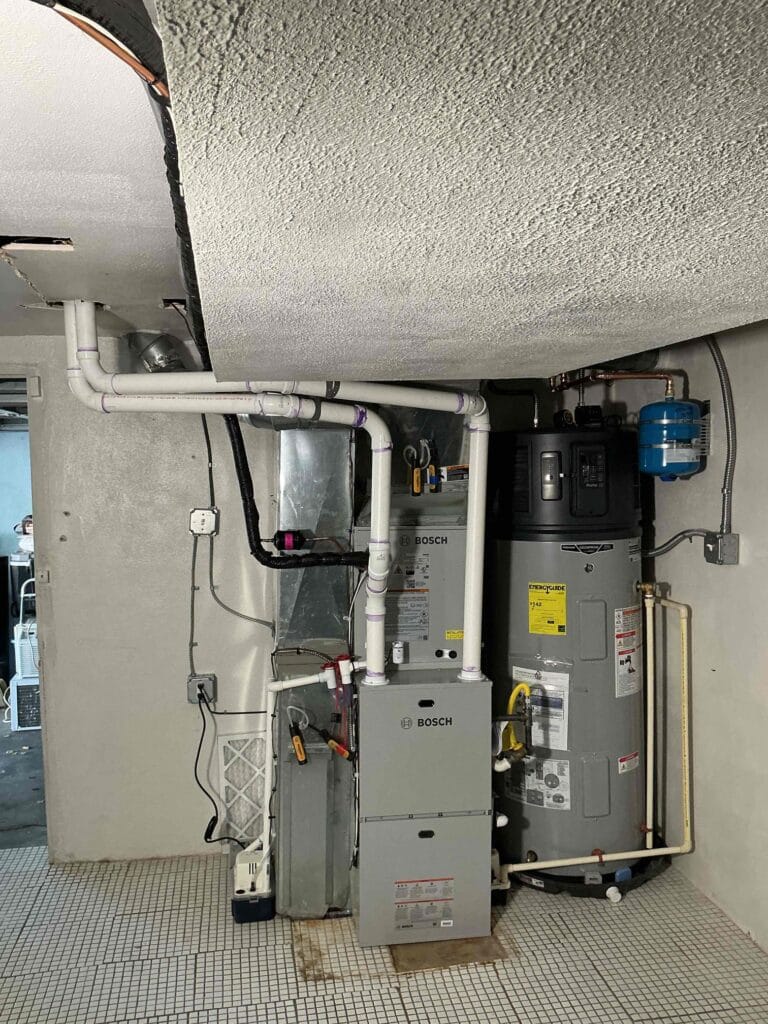
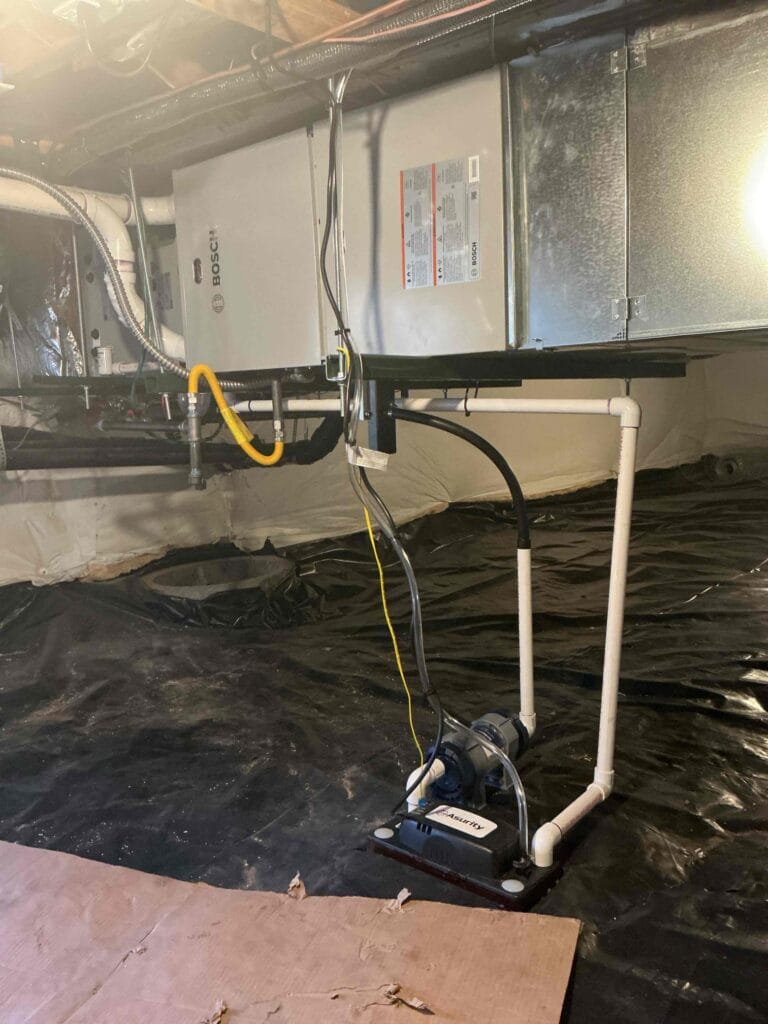
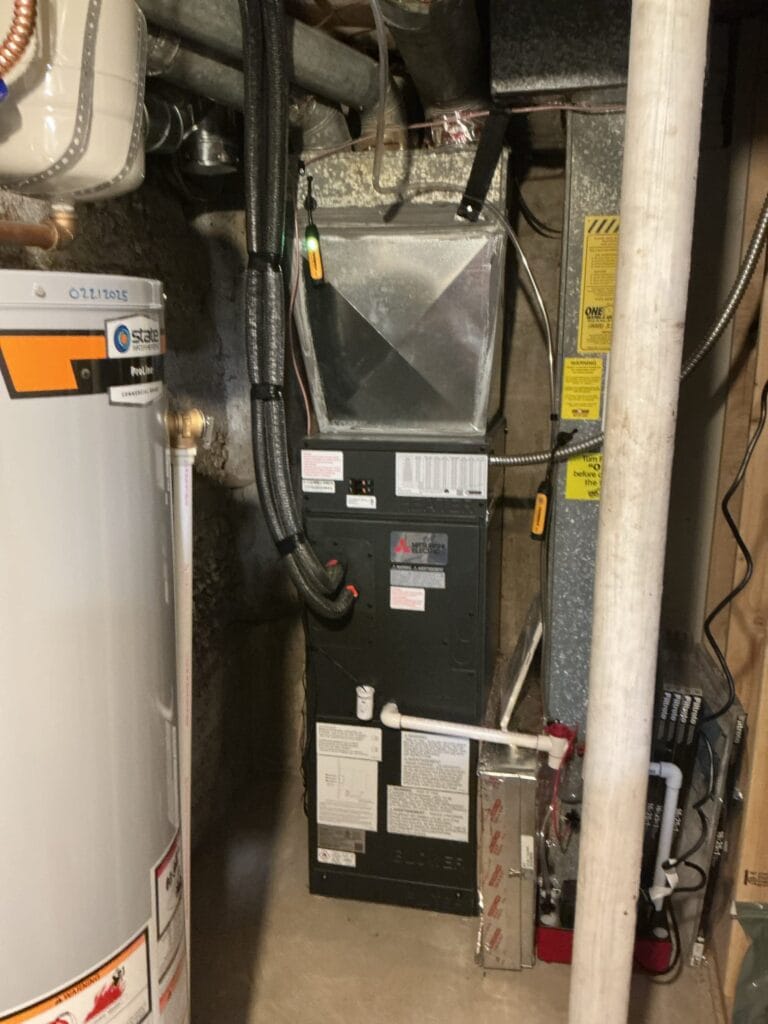
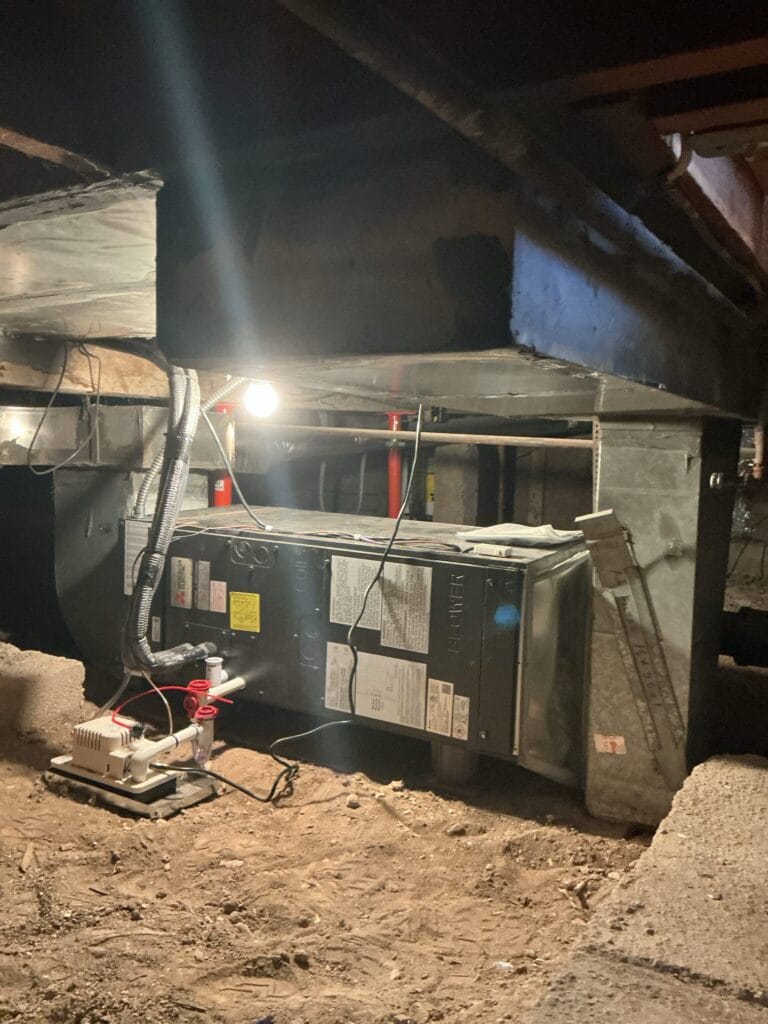
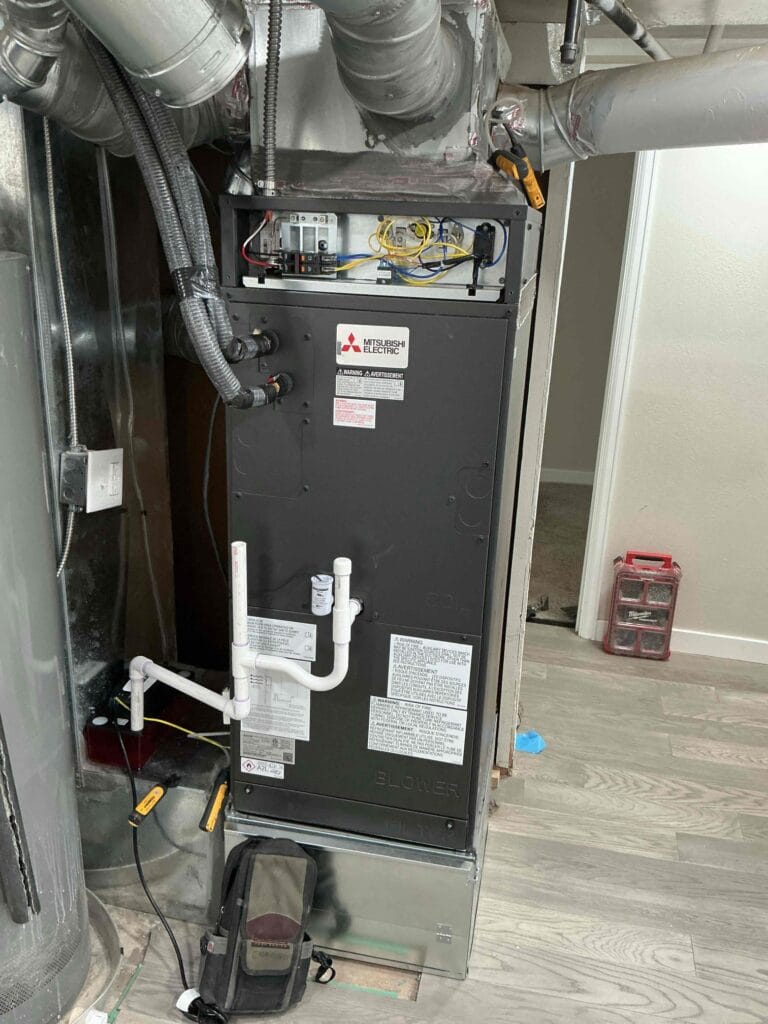
What Drives New Furnace Cost in Denver Homes
Two homes on the same street can get quotes that are thousands of dollars apart, and it is rarely because one contractor is padding the price. The new furnace cost for any home comes down to a handful of specific variables.
Efficiency Rating (AFUE)
AFUE, or annual fuel utilization efficiency, tells you how much of the gas you buy becomes heat inside your home. An 80% furnace turns 80 cents of every dollar into heat and sends the rest up the flue. A 96% furnace captures nearly all of it by condensing water vapor out of the exhaust. Condensing equipment costs more up front because it uses a secondary heat exchanger, a condensate drain system, and sealed combustion. The Department of Energy guide to furnaces and boilers is a good plain language reference if you want the technical background.
Single-Stage, Two-Stage, or Modulating
Staging describes how the furnace burns. A single-stage furnace is either fully on or fully off. A two-stage furnace runs on a lower setting most of the time and only steps up to high fire on the coldest days. A modulating furnace adjusts its output in small increments to match the heat your home is losing at any given moment. Each step up adds to the price, but it also delivers quieter operation, fewer temperature swings, and longer, gentler run cycles that are easier on components.
Proper Sizing and Load Calculation
Bigger is not better with furnaces. An oversized furnace short cycles, wastes fuel, and wears out early, while an undersized one runs nonstop on January nights. A proper load calculation looks at square footage, insulation, window area, air leakage, and orientation before a model is selected. It rarely changes the new furnace cost by much, but it is the single biggest factor in whether the furnace you pay for actually performs. Plenty of north metro homes were built with oversized equipment, so a correctly sized replacement is sometimes smaller and less expensive than the unit coming out.
High Altitude Setup
At 5,280 feet, every cubic foot of combustion air holds less oxygen than it does at sea level, so most gas furnaces must be adjusted for altitude. Depending on the manufacturer, that can mean a high altitude conversion kit, a different gas orifice, or a pressure switch change, followed by a combustion analysis to confirm the burner is running clean. These parts add little to the furnace installation cost, but a quote that never mentions altitude is a red flag that the installer may not be setting the furnace up for Colorado conditions.
Venting Changes
Venting is one of the biggest swing factors when moving from an 80% furnace to a condensing model. An 80% furnace sends hot exhaust through a metal flue, often shared with the water heater and run up a masonry chimney. A 96% or higher furnace sends cool, wet exhaust through PVC pipe out a side wall or the roof, and it needs a condensate drain. If the new PVC run is short and straightforward, the added cost is small. If the path to an exterior wall is long, crosses finished space, or requires a condensate pump, it can add several hundred to over a thousand dollars to your new furnace cost.
Ductwork and Airflow
A new furnace is only as good as the duct system it is connected to. Undersized return air, crushed flex duct, and leaky joints can choke a brand new blower and erase the efficiency you paid for. Minor fixes like a new filter rack, plenum transition, or duct sealing are often included or inexpensive. Larger corrections, such as adding a return or resizing trunk lines, are quoted separately. If you already deal with rooms that never feel right, our guide to hot upstairs and cold downstairs explains how airflow problems show up.
Gas Line, Electrical, and Permits
Higher capacity or relocated equipment may need gas line adjustments, a new shutoff valve, or a dedicated electrical circuit. Every furnace installation in the Denver metro also requires a mechanical permit and inspection through your city or county, which typically adds a few hundred dollars to the furnace installation cost. A permitted install protects you at resale and makes sure the gas piping, venting, and combustion air are checked by someone other than the installer.
Thermostat and Accessories
A basic thermostat is usually included. Upgrading to a smart or communicating thermostat, adding a whole home humidifier for dry Colorado winters, or installing a media filter cabinet each add to the furnace installation cost, so ask for them as separate line items. These are optional, but many homeowners find the humidifier in particular is worth bundling while the system is already open.
Colorado Changes That Affect New Furnace Cost in 2026
Several policy changes landed close together, and they explain why furnace pricing in Colorado looks different this year than it did in 2024 or 2025.
Colorado’s Low Emission Furnace Requirement
Starting January 1, 2026, Colorado requires new residential furnaces and water heaters sold in the state to either meet ultra-low nitrogen oxide (NOx) emission limits or carry ENERGY STAR certification. Distributors and retailers were allowed to sell through existing inventory, but as that stock runs out, standard emission 80% furnaces are being replaced by low NOx versions. Ultra-low NOx equipment generally costs more to build, comes in fewer model options, and can be tighter on supply. In practical terms, the price gap between an 80% furnace and a 96% furnace has narrowed, because the budget option is no longer as cheap as it used to be.
The Federal Tax Credit Is Gone
Through the end of 2025, a qualifying condensing gas furnace could earn a federal tax credit under Section 25C. That credit expired December 31, 2025, so there is no federal tax credit for a furnace installed in 2026. Older articles and some contractor websites still mention it, so be cautious of any quote that subtracts it from your price.
The 2028 Federal Efficiency Standard
The Department of Energy has a finalized rule requiring new residential gas furnaces manufactured on or after December 18, 2028 to meet a 95% AFUE minimum, and a federal court upheld that rule in 2025. It does not affect furnaces already installed, and it does not force anyone to replace working equipment. It does signal that 80% furnaces are on their way out nationally, which is worth weighing if you plan to stay in your home for the next 15 to 20 years.
80% vs 96% vs Modulating: Which Tier Fits Your Home?
There is no single right answer, but most homeowners land in one of three situations.
An 80% furnace can still make sense when the venting path makes a condensing furnace difficult, when you plan to sell in the next few years, or when budget is the deciding factor. Keep in mind that the low NOx requirement has shrunk the savings compared to a few years ago.
A 96% two-stage furnace is the most common choice for north metro homes with basement equipment and a clear path to an outside wall. It balances upfront new furnace cost against lower gas bills and quieter, more even heat.
A modulating furnace is worth the premium for larger homes, multi-story homes with zoning, and homeowners who are sensitive to temperature swings and noise. It pairs best with a variable speed blower and a communicating thermostat.
As a rule of thumb, the more hours your furnace runs each winter, the faster a condensing model pays back its premium. ENERGY STAR keeps an updated list of certified models and their efficiency ratings on its furnace product page if you want to compare specific equipment.
Ready for Real Numbers on Your Home?
Ranges are helpful, but nothing replaces an in-home evaluation. A Comfort Crew comfort advisor will measure your home, look at your venting and ductwork, and give you written pricing on every tier that makes sense, with no pressure to buy more than you need.
Furnace Only, or Furnace and Air Conditioner Together?
If your air conditioner is more than 10 years old, it is worth pricing both systems. Replacing the furnace and AC together shares one installation visit, keeps the blower, indoor coil, and outdoor unit properly matched, and avoids paying for a second round of labor a year or two later. A combined furnace and AC replacement in the Denver metro commonly runs $12,000 to $20,000 or more, depending on efficiency and cooling capacity.
Newer air conditioners also use updated refrigerants such as R-454B, so pairing a new furnace with a 15 year old AC can leave you with an outdoor unit that gets harder and more expensive to service each year. Our AC replacement page covers what goes into the cooling side of that decision.
Many Colorado homeowners are also pricing a cold climate heat pump, either on its own or paired with a gas furnace as backup in a dual fuel setup. Most of the larger incentives in Colorado right now are aimed at heat pumps rather than gas furnaces, so it is worth getting both numbers. Our heat pump installation page and our comparison of AC versus heat pump options walk through the tradeoffs.
Hidden Costs to Ask About Before You Sign
The lowest number on paper is not always the lowest new furnace cost once the job is finished. These are the items most likely to show up as surprises if they are not addressed in writing.
- Orphaned water heater. When an 80% furnace that shared a chimney with a gas water heater is replaced by a PVC vented condensing furnace, the water heater is left alone in a flue sized for two appliances. That can cause poor draft and condensation, and the fix is usually a chimney liner or a vent change for the water heater.
- Condensate pump and drain routing. If there is no floor drain near the furnace, a condensate pump and drain line are needed.
- Gas line sizing. A larger or relocated furnace may need a bigger gas line or a new shutoff.
- Return air corrections. Many older homes have too little return air, which strains new equipment.
- Disposal of the old unit. Most quotes include it, but confirm.
- Permit and inspection fees. These should be included, not added later.
- Electrical work. Some installs need a new circuit, disconnect, or outlet for a condensate pump.
How to Compare New Furnace Quotes
When you have two or three quotes on the table, line them up against the same questions so you are comparing the same scope of work, not just the bottom line.
- Was a load calculation performed, or was the furnace sized by matching the old unit?
- What are the exact model numbers, AFUE rating, and staging for each option?
- Does the equipment meet Colorado’s low emission requirement or carry ENERGY STAR certification?
- What is the venting plan, and what happens to the water heater?
- Is high altitude setup and a combustion analysis included?
- Is the permit included, and who schedules the inspection?
- What are the warranty terms for parts and labor, and who registers the equipment?
- Will startup readings be documented and handed to you at the end of the job?
A quote that answers all eight clearly is worth more than a cheaper quote that answers none of them. We cover this in more depth in our post on what cheap HVAC installation quotes hide, and our article on who really owns your HVAC company explains why the installer behind the quote matters as much as the equipment.
What a Professional Furnace Installation Includes
A properly done furnace installation follows the same steps every time, and every one of them affects how long the new system lasts.
- In-home evaluation and load calculation to select the right size and tier.
- Permit filing with your city or county.
- Removal and disposal of the old furnace.
- Setting the new furnace and connecting gas, venting, condensate, and electrical.
- High altitude configuration per the manufacturer’s instructions.
- Startup and commissioning, including a gas leak check, combustion analysis, temperature rise, and static pressure readings.
- Homeowner walkthrough covering filters, thermostat settings, and warranty registration.
- Final inspection by the local building department.
Steps six and seven are the ones most often skipped on rushed jobs, and they are also where the efficiency you paid for is either confirmed or lost. Learn more about our full furnace replacement process and our complete range of heating services.
Rebates, Financing, and Ways to Lower Your New Furnace Cost
There are still several ways to bring the cost of a new furnace down in 2026, even without a federal credit.
Check current utility and state programs. Incentives change during the year, and most of the larger ones currently favor heat pumps. Xcel Energy and the Colorado Energy Office publish the programs that are active right now, and our heat pump rebates page and rebate calculator show how they apply if you are weighing a heat pump or dual fuel system.
Use available discounts. The Comfort Crew’s current HVAC coupons include $500 off installation and $0 estimates.
Spread the payment out. HVAC financing with 0% options is available for qualified homeowners, which can make a better tier affordable without draining savings.
Plan ahead when you can. Replacing an aging furnace before it fails gives you time to compare options and schedule on your terms, instead of accepting whatever equipment is available during a cold snap.
How Long Will a New Furnace Last?
A quality gas furnace installed correctly and maintained every year commonly lasts 15 to 20 years in the Denver metro. Our guide to how long furnaces last covers the factors that shorten or extend that lifespan. Annual furnace maintenance is the simplest way to protect the investment, and a maintenance membership keeps tune-ups on schedule so you never have to remember.
Furnace Installation Across the Northern Denver Metro
The Comfort Crew Heating and Cooling provides furnace evaluations, installation, and replacement throughout the northern Denver metro and surrounding communities, including:
Westminster Thornton Northglenn Broomfield Brighton Erie
Do not see your city listed? Visit our full areas we serve page or contact us to ask about service in your area.
Frequently Asked Questions About New Furnace Cost
What is the average new furnace cost in Denver? Most installed gas furnaces in the Denver metro fall between $5,000 and $14,000 in 2026. Standard 80% models sit at the low end, two-stage 96% models in the middle, and modulating models at the top. Venting, ductwork, and accessories can move any quote up or down.
Is a 96% furnace worth it in Colorado? For most homes with basement equipment and a reasonable venting path, yes. Long Colorado heating seasons give a condensing furnace plenty of run time to recover its higher price through lower gas bills, and the low NOx rule has narrowed the price gap with 80% models.
Can I still buy an 80% furnace in Colorado? Yes. New furnaces sold in Colorado must now meet ultra-low NOx emission limits or carry ENERGY STAR certification, and low NOx 80% models are available. Expect fewer model choices and a higher price than 80% furnaces carried a few years ago.
Is there a tax credit for a new furnace in 2026? No. The federal Section 25C credit expired December 31, 2025. Current incentives in Colorado focus mainly on heat pumps, so check Xcel Energy and Colorado Energy Office programs if you are considering a heat pump or dual fuel system.
Does a furnace installation need a permit in the Denver metro? Yes. Furnace replacement requires a mechanical permit and inspection through your city or county. A reputable contractor pulls the permit and includes the fee in the quote.
How long does a furnace installation take? A straightforward furnace swap usually takes one day. Jobs that add new venting, ductwork changes, or a new air conditioner may take one to two days.
Does altitude change the cost of a new furnace? Slightly. Most furnaces need a high altitude adjustment or kit at Denver elevations, plus a combustion analysis at startup. The parts are inexpensive, but the setup matters for safety and efficiency.
Should I replace my furnace and AC at the same time? If your AC is more than 10 years old, pricing both is smart. A matched system performs better, and one installation visit usually costs less than two separate projects a few years apart.
Schedule Your Free Furnace Estimate
Knowing the typical new furnace cost is a good start, but the right number for your home comes from someone actually looking at it. The Comfort Crew will walk your home, explain every option in plain language, and give you written pricing with no surprises, so you can decide on your schedule instead of in the middle of a cold snap.
We proudly serve homeowners throughout Westminster, Thornton, Northglenn, Broomfield, Brighton, Erie, and every community in between across the Denver metro.
Contact The Comfort Crew today to schedule your free furnace estimate and take the guesswork out of your next heating upgrade.