
Central air conditioning installation is one of the most impactful upgrades a Denver-area home can get. The right system keeps temperatures consistent, manages humidity, and runs efficiently even when outdoor temps climb past 95 degrees for days at a stretch. At The Comfort Crew, we handle central air conditioning installation from start to finish — proper sizing, matched equipment, clean installation, and full startup testing. We serve homeowners across the Denver metro and northern Front Range with $0 estimates and 0% financing on every job.
If you have been searching for an air conditioner installation near me, the difference between a good install and a poor one shows up fast. An undersized system runs constantly and never reaches the set temperature. An oversized system short-cycles, leaves the home humid, and wears out faster. A properly matched and installed system does neither.
Schedule your central air conditioning installation — use our $50 off coupon here.
Most homeowners think of central air conditioning installation as swapping out the outdoor unit and calling it done. A proper install is more involved than that, and the details are what determine whether the system performs well for 15 years or causes headaches from year one.
Load calculation first. Before any equipment is selected, we calculate the actual cooling load for the home. This means accounting for square footage, ceiling height, window placement and orientation, insulation levels, local climate data, and duct condition. Manual J load calculations are the industry standard and the only accurate way to size a system. Guessing based on square footage alone produces the wrong answer most of the time.
Equipment selection. Once we know the correct tonnage, we select equipment that matches the home’s existing air handler or furnace. Mismatched equipment — a new outdoor condenser paired with an old, undersized coil — limits efficiency and can cause refrigerant and airflow problems from day one. Proper matching matters more than most homeowners realize.
Refrigerant line installation. New line sets need to be properly sized, supported, insulated, and connected. Refrigerant charge must be verified at startup, not just assumed based on factory charge. On systems using R-454B or R-410A, proper charge verification requires measuring operating pressures against actual conditions.
Electrical connections and disconnect. The outdoor unit needs a dedicated circuit, a properly sized disconnect, and correct breaker sizing. Undersized wiring is a fire risk and causes nuisance tripping.
Condensate drainage. The indoor coil removes moisture from the air, and that moisture has to go somewhere. A properly pitched and clear condensate drain prevents water damage, mold growth, and system shutdowns.
Thermostat setup and startup testing. Every central air conditioning installation we complete includes full thermostat setup, system startup, and verification that the system is hitting the correct temperature split across the supply and return air. If anything is off, we find it before we leave.
Not every situation calls for a repair. These are the signs that a central air installation makes more sense than continued maintenance spending:
The system is over 15 years old. Modern air conditioners are dramatically more efficient than systems installed before 2010. A 15-year-old unit running on R-22 refrigerant (which is no longer manufactured and now very expensive) is a strong candidate for replacement. A new central air conditioning installation typically pays for itself in energy savings within 5 to 8 years.
Repair costs are approaching 50% of replacement cost. The industry rule of thumb is straightforward: if a repair costs more than half what a new system would cost, replace it. A failing compressor on a 12-year-old system almost always falls into this category.
The system cannot keep up on hot days. If your home reaches 80 degrees inside on a 95-degree afternoon despite the air conditioner running constantly, the system is undersized, failing, or both. A properly sized central air installation will handle Colorado’s hottest days without strain.
You are adding square footage or finishing a basement. Any significant addition to the home’s conditioned space changes the cooling load calculation. The existing system may no longer be adequate, and a new central air conditioning installation sized for the updated footprint is often the right answer.
Energy bills are climbing without explanation. A degrading air conditioner loses efficiency every year. If your Xcel Energy bills are increasing despite similar usage patterns, declining system efficiency is a likely cause.
Homeowners searching for an ac installation company in Denver have more options than they did a decade ago. Here is how to think through the main choices:
A standard split system — outdoor condenser, indoor coil, existing ductwork — is the most common central air conditioning installation in the Denver metro. These systems are straightforward to install, widely available, and work well in homes with existing forced-air ductwork. Modern standard systems are available with SEER2 ratings from 14 to 18, which represents a significant efficiency improvement over equipment installed before 2015.
High-efficiency systems with SEER2 ratings of 18 and above use variable-speed compressor technology to modulate output based on actual demand. Instead of running at full blast and then shutting off, a variable-speed system runs longer at lower capacity, which improves humidity control, reduces temperature swings, and cuts energy consumption significantly. For Denver homes where summer humidity is a comfort factor, the humidity control improvement alone often justifies the higher upfront cost.
A heat pump provides both cooling and heating from a single outdoor unit. For homeowners replacing both an air conditioner and a furnace, a heat pump installation can be more cost-effective than two separate systems. Xcel Energy offers rebates of up to $2,250 per ton on qualifying cold-climate heat pump systems, which significantly reduces the net cost of installation. The Comfort Crew is a qualified installer for Xcel Energy rebate programs.
For homes without existing ductwork, room additions, or detached garages and workshops, ductless mini-split systems provide central air conditioning installation without the need for ducts. These systems are highly efficient and offer zone control that traditional ducted systems cannot match.
Central air conditioning installation costs in Denver typically range from $3,500 to $12,000 depending on system type, size, and installation complexity. Here is what moves the number:
System size and efficiency. A 2-ton standard efficiency system costs less than a 4-ton variable-speed system. SEER2 ratings, brand, and features all affect equipment cost.
Existing infrastructure. Homes with properly sized existing ductwork, a compatible air handler, and adequate electrical service have lower installation costs. Homes that need new ductwork, electrical upgrades, or a new air handler pay more.
Line set length and routing. The distance between the indoor and outdoor units, and how difficult the routing is, affects labor cost. A straight 10-foot run through an exterior wall is easier than a 50-foot run through a finished basement.
Permits and inspections. All central air conditioning installation work in Denver requires permits. The Comfort Crew handles permitting as part of every installation — no homeowner should be left managing that process.
Brand and warranty. Premium brands with longer warranties cost more upfront but often carry better long-term value, especially when paired with manufacturer rebates and Xcel Energy incentives.
Every central air conditioning installation quote from The Comfort Crew is itemized and presented before any work begins. No surprises on the invoice.
One thing worth knowing: the lowest bid is not always the best value on a central air installation. A company that skips the load calculation, uses mismatched equipment, or cuts corners on refrigerant charge will deliver a system that underperforms and fails early. The cost of a second installation is always higher than the cost of doing it right the first time.
The Comfort Crew also helps homeowners navigate available rebates and incentives that reduce the net cost of installation. Qualifying systems may be eligible for Xcel Energy rebates, the federal IRA heat pump tax credit, and Colorado state incentives. We identify which rebates apply to your specific equipment selection before you sign anything, so the number you agree to is the number that reflects actual out-of-pocket cost after incentives.
SEER2 is the current efficiency standard for air conditioners, replacing the older SEER rating in 2023. SEER2 stands for Seasonal Energy Efficiency Ratio 2 and measures how efficiently the system converts electricity into cooling over an entire season.
The minimum SEER2 for new central air conditioning installation in Colorado is 13.4 for split systems. High-efficiency systems reach 18 to 22 SEER2. The practical difference matters — upgrading from a 10 SEER system to a 16 SEER2 system reduces cooling energy consumption by roughly 37%. For a Denver home spending $200 per month on cooling during peak summer, that is about $74 per month in savings.
According to the U.S. Department of Energy, choosing a higher efficiency air conditioner is one of the most cost-effective home energy improvements available. The payback period on the efficiency premium is typically 3 to 6 years in Colorado’s climate.
Here is exactly what happens when you book a central air conditioning installation with The Comfort Crew:
Step 1 — Free in-home estimate. We visit the home, assess the existing system and infrastructure, perform a load calculation, and present equipment options with transparent pricing. No cost, no obligation. This is the $0 estimate that is part of every job we do.
Step 2 — Equipment selection. We recommend the system that fits the home’s actual needs and budget. If Xcel Energy rebates apply, we identify them upfront so you know the net cost before committing.
Step 3 — Permitting. We pull the required permits with the local jurisdiction. This protects you as the homeowner and ensures the installation is done to code.
Step 4 — Installation day. Our technicians arrive on time, protect interior surfaces, and complete the full installation including line set, electrical connections, indoor coil, condensate drain, and outdoor condenser placement. A typical residential central air installation takes 4 to 8 hours.
Step 5 — Startup and verification. We run the system through a full startup sequence, verify refrigerant charge, measure supply and return air temperatures, and confirm the system is hitting spec before we leave. You get a written summary of what was installed and how it performed.
Step 6 — Cleanup and walkthrough. We clean up the work area completely and walk you through the new system, thermostat operation, and any maintenance items you should be aware of.
Selecting the correct system capacity so the equipment runs efficiently without short cycling or constant operation.
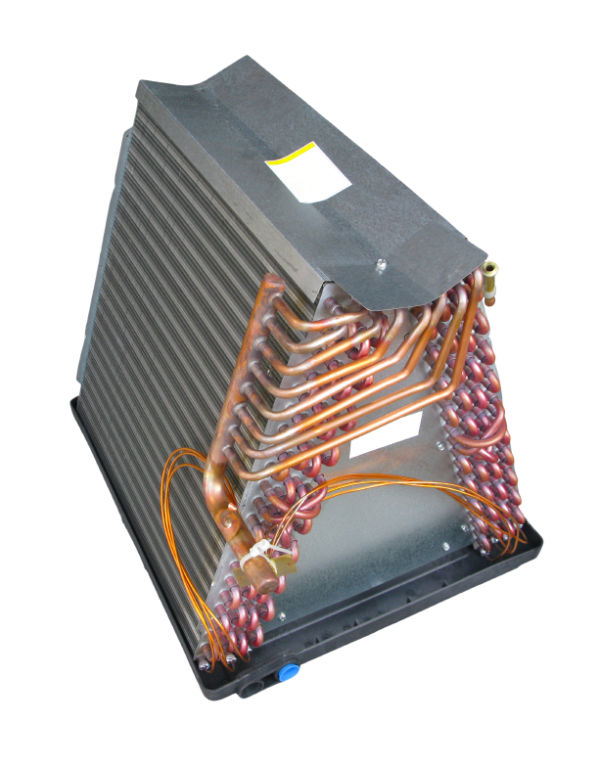
Removing the existing system and installing compatible condenser and evaporator coil combinations designed to perform together.
Evaluating the copper refrigerant lines line set and replacing it when necessary to prevent leaks or contamination.
Ensuring disconnects, breakers, and wiring support the new equipment safely.
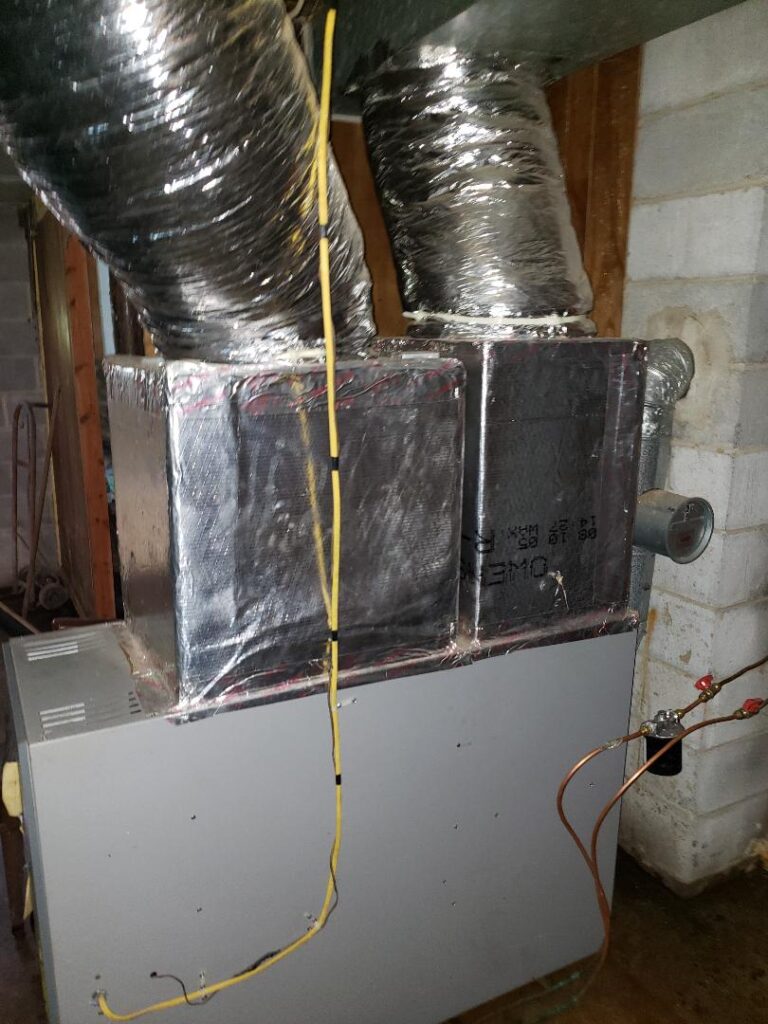
Checking ductwork and return airflow to make sure the system can move the air it needs.
Traditional split systems with an outdoor condenser and indoor evaporator coil. These remain the most common cooling systems for homes throughout the Denver metro area.
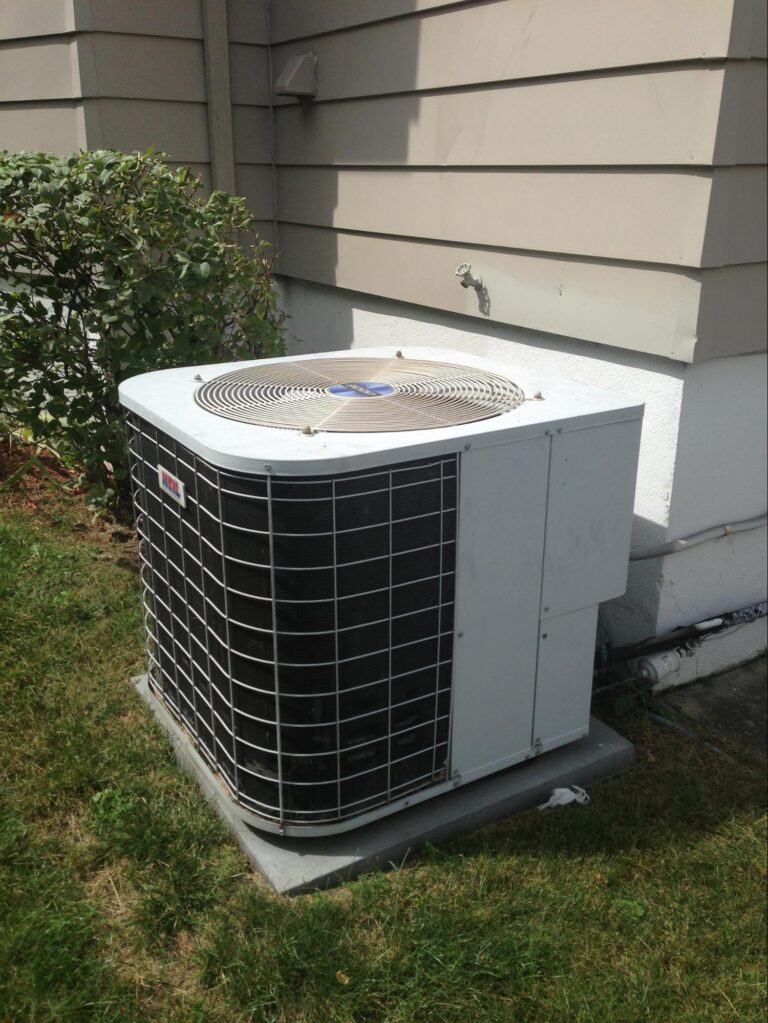
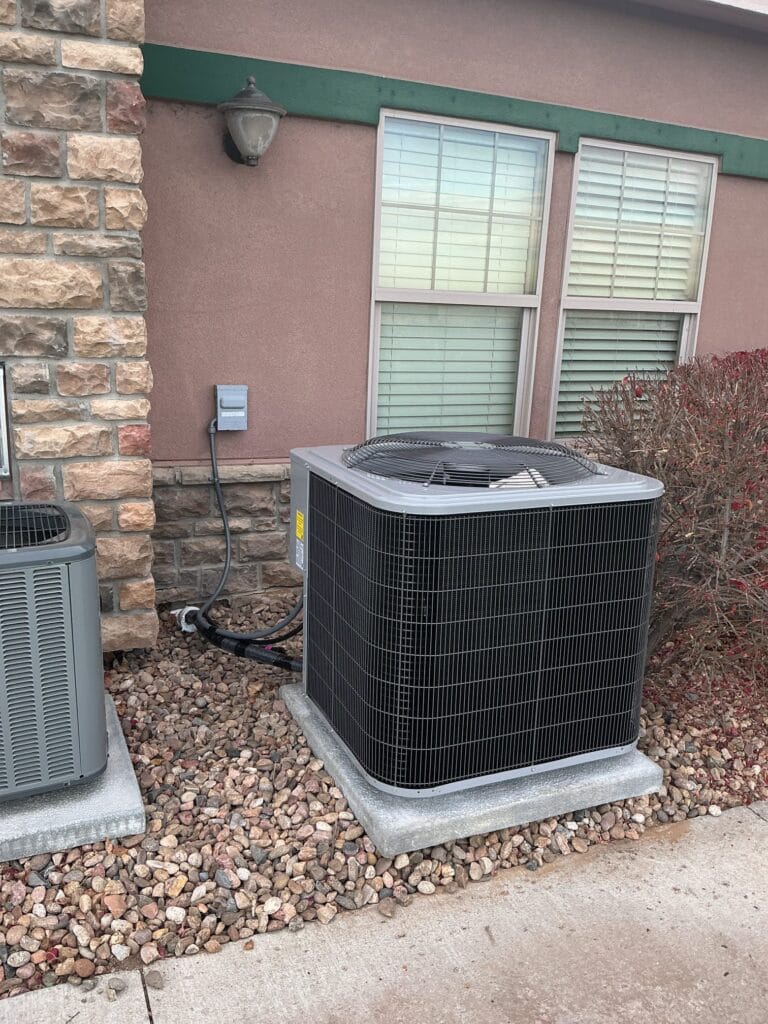
High-efficiency air conditioners are designed to cool homes using less electricity while maintaining strong performance during hotter summer conditions. Many modern systems use advanced compressors and variable-speed technology to improve comfort and energy efficiency.
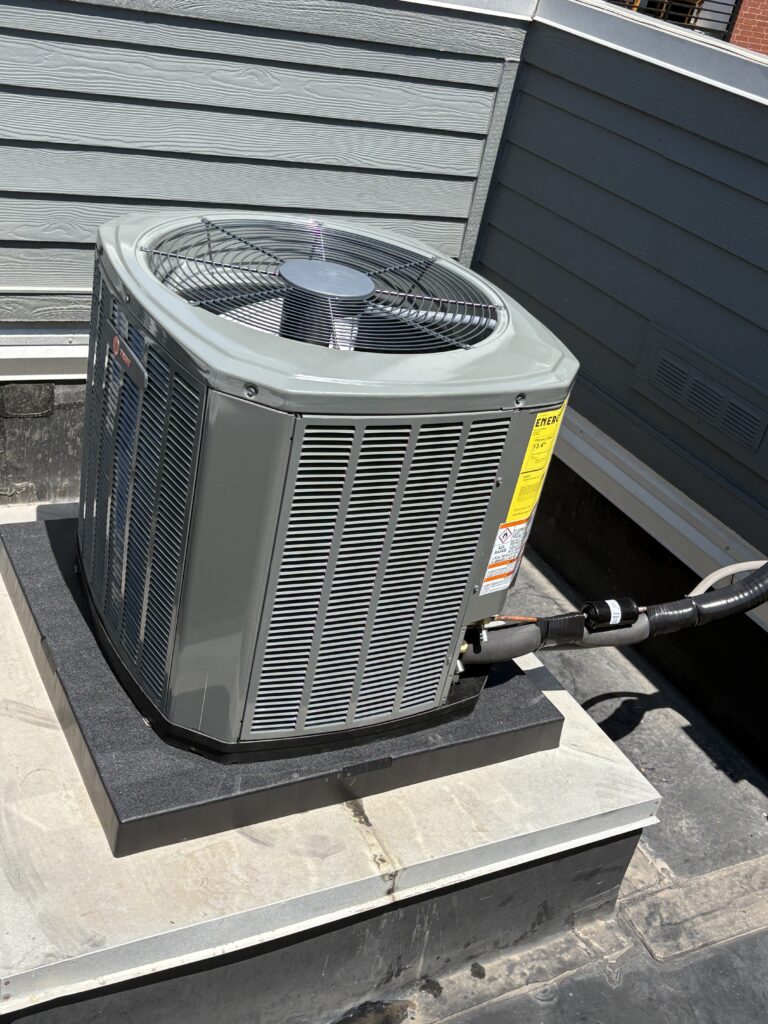
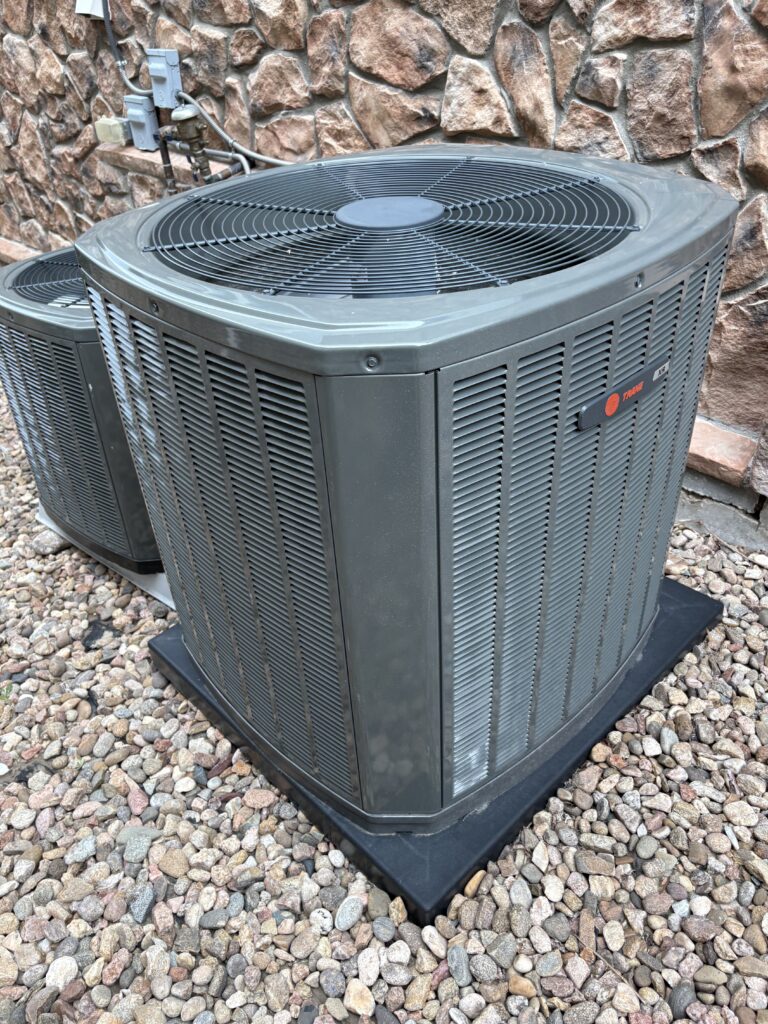
Replacing both the outdoor condenser and the indoor evaporator coil ensures the system components are properly matched. This helps maintain efficiency, improves cooling performance, and reduces the chance of premature equipment issues.
Denver’s climate creates specific challenges for central air conditioning installation that do not exist in most other parts of the country.
Altitude affects system performance. At 5,280 feet above sea level, the air is less dense than at sea level. This affects both the cooling capacity of refrigerant-based systems and the airflow performance of blower motors. Equipment is derated at altitude, which means a system that delivers its rated capacity at sea level delivers slightly less at Denver elevations. A proper load calculation accounts for this. Many out-of-state HVAC contractors miss it.
Colorado has dry heat. Unlike humid climates where sensible and latent cooling loads are roughly equal, Denver summers have low humidity for most of the season. This means sensible cooling — dropping the temperature — matters more than latent cooling — removing moisture. System selection and airflow design should reflect this. Oversized systems that short-cycle cause more problems in humid climates than in Denver, but they still waste energy and cause comfort issues here.
Cottonwood season is real. Denver’s cottonwood season, typically late May through June, can clog outdoor condenser coils quickly on newly installed systems. We advise homeowners to check and clean condenser coils annually and to keep landscaping trimmed back from the outdoor unit.
Temperature swings stress equipment. Denver commonly sees 40-degree temperature swings in a single day. Systems that are sized for peak afternoon demand but never properly set up for startup behavior can short-cycle during the cooler morning hours. Proper startup settings and thermostat programming matter here.
Duct systems vary widely across the metro. Homes in older neighborhoods like Wheat Ridge, Lakewood, and Englewood often have duct systems that were designed for heating only and retrofitted for cooling. Homes in newer Centennial, Parker, and Highlands Ranch developments typically have better-designed duct systems. The condition and design of existing ductwork is one of the biggest variables in a central air conditioning installation project, and it cannot be assessed remotely.
How long does central air conditioning installation take in Denver? Most central air conditioning installations in the Denver metro take 4 to 8 hours for a standard split-system replacement. New installations in homes without existing ductwork take longer and may require multiple visits. We give a realistic time estimate during the free in-home assessment.
Do I need a permit for AC installation in Denver? Yes. All central air conditioning installation work in Denver and the surrounding municipalities requires a mechanical permit. The Comfort Crew pulls all required permits as part of every installation, so the job stays code-compliant and inspection-ready.
What size air conditioner do I need for my Colorado home? System size is set by a Manual J load calculation that accounts for your home’s square footage, insulation, window placement, ceiling height, and Colorado’s climate. A rule of thumb like one ton per 500 square feet isn’t accurate enough for proper sizing and often leads to a system that short-cycles or struggles. We calculate the correct size during your free estimate.
How much does central air conditioning installation cost in Denver? Most residential central air installations in Denver range from $3,500 to $12,000 depending on system size, efficiency level, and installation complexity. We provide itemized quotes with no hidden charges.
Can I get rebates on a new air conditioner in Colorado? Qualifying systems may be eligible for Xcel Energy rebates, the federal IRA energy-efficiency tax credit, and Colorado state incentives. We identify every applicable rebate during your estimate so you know your net cost before deciding.
There are a lot of options when searching for an install air conditioner near me in the Denver metro. Here is what separates The Comfort Crew:
$0 estimates. We quote the full job before any work begins. You know what you are paying before you commit.
0% financing. A central air conditioning installation should not have to wait because of budget timing. We offer 0% financing so you can move forward on your schedule.
Honest recommendations. We do not oversell equipment or push systems that are larger than needed. The right size system is the one we recommend.
Permit-ready. Every installation is permitted and inspected. This protects your home’s value and your warranty. Many homeowners do not realize that unpermitted HVAC work can cause problems when selling the home or filing an insurance claim. Every central air conditioning installation The Comfort Crew completes is fully permitted and passes final inspection.
Local to Denver. We are based in Northglenn and serve the entire metro including Westminster, Broomfield, Thornton, Arvada, Lakewood, Littleton, Englewood, Aurora, Centennial, Denver, Brighton, Golden, Boulder, Lafayette, Louisville, Erie, and Castle Rock.
5-star reputation. Our customers refer us because we show up on time, do the job right, and communicate clearly from first call to final walkthrough.
The Comfort Crew is ready to help you get the right central air installation done right the first time. Whether you are replacing a failing system, installing central air for the first time, or upgrading to a higher-efficiency system before summer, we will walk you through every option with honest pricing and zero pressure.
The Comfort Crew is ready to help you get the right central air installation done right the first time. Call 720-952-5961 or schedule online below.