
The Hidden Cost of Waiting Too Long to Service Your Air Conditioner
Emergency ac repair is almost always more expensive than the maintenance that would have prevented it. Understanding what drives emergency ac repair costs is the first step toward avoiding them. Most homeowners know that on some level. But life gets busy, the system still turns on, the house feels mostly comfortable, and maintenance gets pushed to next month, then next season, then forgotten altogether.
HVAC problems rarely stay small forever.
The biggest repair bills usually start with tiny warning signs homeowners barely notice. A slightly higher utility bill. A faint noise at startup. Longer run times. One room that never quite matches the rest of the house. At first those things do not feel urgent. But they are the system telling you something is off, and the longer they go unaddressed the more expensive the eventual fix gets.
Save $50 on any service call — Claim your coupon
How One Small Problem Becomes a Bigger One
An HVAC system is not a collection of independent parts. Everything is connected, and when one component is struggling the rest of the system has to compensate. That compensation is where the real cost accumulates.
Here is how it plays out in the three most common scenarios.
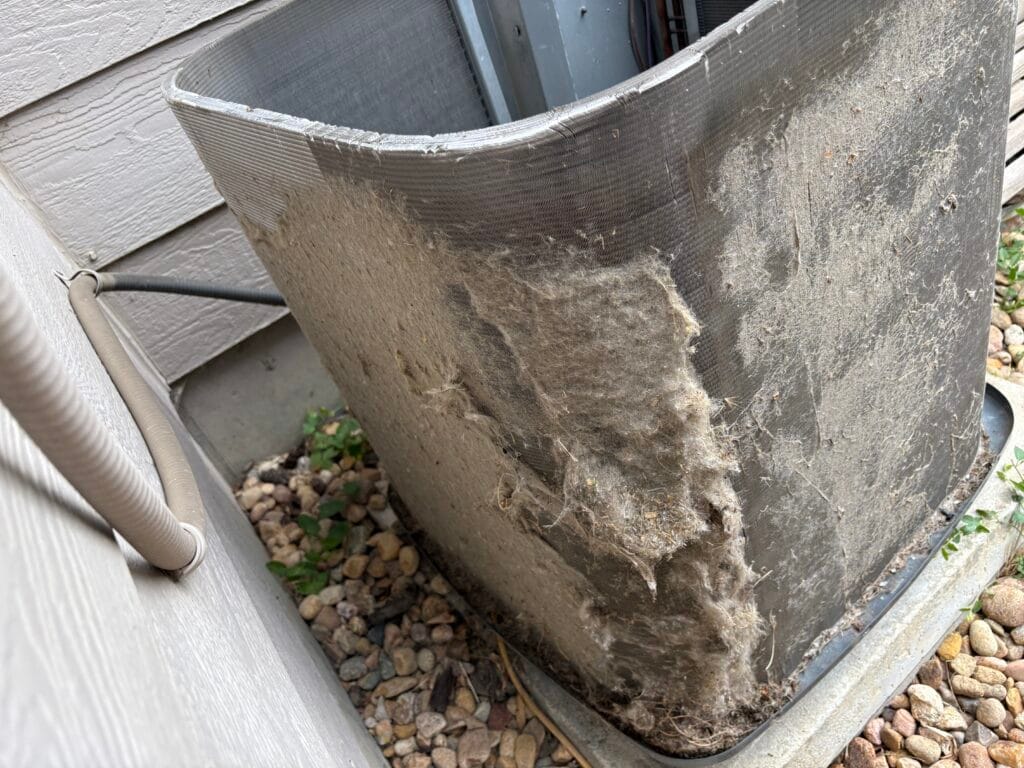
Dirty coils lead to compressor damage. When condenser coils are clogged with dirt, dust, or cottonwood, the system cannot release heat efficiently. The compressor has to work longer and run hotter to do the same job. Over time that extra strain wears down the compressor. Compressor replacement is one of the most expensive hvac repair costs a homeowner can face, often running $1,500 to $3,000 or more depending on the system.
Dirty filters restrict airflow and freeze coils. A clogged filter chokes off the airflow the system needs to function correctly. That leads to a frozen evaporator coil, reduced efficiency, blower motor stress, uneven temperatures throughout the house, and rising energy bills. What started as a $5 filter replacement becomes a diagnostic visit, a coil thaw, and sometimes a blower repair.
Weak capacitors fail at the worst time. Capacitors degrade gradually. The system may show subtle startup symptoms for months before the capacitor finally gives out. That usually happens during the first serious heat wave of the summer, when schedules are backed up and emergency ac repair calls are stacking up across the metro. A capacitor replacement caught during a spring tune-up costs a fraction of what an emergency ac repair call runs in July.






7 Warning Signs Your System Is Building Toward an Emergency AC Repair
These are the things homeowners notice but tend to wait on. Do not wait on them.
1. Rising energy bills without a clear reason. If your cooling costs are climbing month over month without a corresponding change in how you use the system, the equipment is losing efficiency. It is working harder to produce the same result and you are paying for it.
2. Longer run times. A system that used to cool the house in 20 minutes now takes 45. That is not normal aging. That is a system that is struggling. Dirty coils, low refrigerant, or airflow restriction are the most common causes.
3. Weak airflow at the vents. If you hold your hand up to a supply vent and the airflow feels noticeably weaker than it used to, something is restricting the system. Start with the filter. If that is clean, the issue is further inside.
4. One room that never cools down. This is one of the most common precursors to an emergency ac repair call that could have been avoided. Comfort inconsistency is usually an airflow or equipment performance issue. It gets worse as the underlying problem gets worse. By the time it becomes a full emergency ac repair situation, that room has been uncomfortable for at least one full season.
5. Unusual noises at startup or shutdown. Clicking, humming, rattling, or a grinding noise when the system starts or stops are not sounds to ignore. They almost always point to a specific mechanical or electrical component that is wearing out.
6. Ice forming on the refrigerant lines or indoor coil. This is a visible sign that something is wrong with refrigerant levels or airflow. Ice on the lines means the system is not operating correctly and continued operation will cause damage.
7. The system short cycles. Short cycling means the system turns on, runs briefly, shuts off, and repeats. It is one of the most stressful operating conditions for HVAC equipment and accelerates wear on the compressor and electrical components significantly.
Why Colorado Conditions Make Deferred Maintenance More Expensive
Colorado puts more stress on HVAC equipment than most homeowners realize, and that stress makes ignoring maintenance more costly here than in most climates. It also makes emergency ac repair harder to schedule and more expensive when it finally happens.
High elevation means equipment operates in thinner air, which affects heat transfer and combustion efficiency. Dry conditions pull more moisture out of the system. Cottonwood season clogs outdoor coils faster than anywhere else in the country. Intense UV exposure degrades insulation on refrigerant lines and outdoor components. Large temperature swings between heating and cooling seasons mean the system transitions more often and cycles more aggressively than in more stable climates.
All of these factors mean that the wear which builds up between maintenance visits accumulates faster in Colorado. A system that runs fine for two seasons without service in a mild climate may show real performance problems after one season here.
That accelerated wear is exactly what makes regular ac maintenance services so much more valuable along the Front Range than in other parts of the country, and what makes emergency ac repair so much more likely for homeowners who skip it. A system that might last two seasons without service in a mild climate may show real performance problems after one season here. That is why ac maintenance services, hvac maintenance service visits, and heating and ac service near me appointments matter more along the Front Range than most homeowners expect.
Emergency AC Repair Is Hardest to Get When You Need It Most
The worst time to need emergency ac repair is the first major heat wave of the summer. That is also exactly when it happens most often.
Once temperatures spike across the Denver metro, HVAC companies fill up fast. Emergency ac repair calls stack up. Wait times that are typically a day or two can stretch to four or five days. 24 hr ac service near me options exist but come at a premium. The house is hot, the family is uncomfortable, and the repair that might have been $200 in April is now an emergency call rate plus parts.
Homeowners who schedule air conditioning maintenance near me visits and A/C Maintenance and Cooling System Inspection appointments in April and May consistently avoid this situation. Problems get caught before they matter. The system gets checked before the season pushes it hard. That is the most reliable way to avoid emergency ac repair during peak demand. And if something does come up, it gets handled on a normal schedule at normal rates instead of as an emergency.
Comfort Crew Club members also receive priority scheduling year-round, which means they are ahead of the general queue even during peak demand. See our current ac tune up specials and Membership Savings for plan details.
What a Professional Tune-Up Finds Before It Becomes Emergency AC Repair
A professional ac maintenance services visit is not just a visual inspection. It is a thorough evaluation of every component that is most likely to fail.
What gets checked:
- Capacitor and contactor condition — the components most likely to cause a no-start situation
- Refrigerant level — low refrigerant causes poor cooling, frozen coils, and compressor stress
- Condenser and evaporator coil condition — dirty coils are the most common cause of efficiency loss
- Airflow measurement — confirms the system is moving the right amount of air through the duct system
- Blower motor operation — a struggling blower causes uneven temperatures and short cycling
- Condensate drain — a clogged drain causes water damage and system shutdowns
- Electrical connections and wiring — loose connections cause component failures and safety hazards
- Overall temperature split — confirms the system is actually producing the cooling output it should
Each of these is a potential emergency ac repair waiting to happen if it goes unaddressed. Catching them during a tune-up costs a fraction of what catching them during a breakdown will.
Why Waiting Is Always the More Expensive Choice
The math on emergency ac repair versus preventive maintenance is not complicated.
A spring ac maintenance services visit typically runs $80 to $150. It catches the things most likely to fail before summer. A failing capacitor gets replaced for $150 to $250. A dirty coil gets cleaned before it causes compressor strain. Low refrigerant gets addressed before ice forms on the lines and damages the system further.
Compare that to what happens when those same issues are left alone. The capacitor that was borderline in May fails during a 95-degree week in July. Now you are competing for an emergency ac repair appointment with every other homeowner whose system gave out in the same heat wave. Emergency rates apply. If the failed capacitor caused the compressor to overheat in the meantime, the hvac repair cost jumps from a few hundred dollars to several thousand.
The homeowners who avoid expensive emergency ac repair are almost always the ones who scheduled a tune-up in spring, noticed an issue before it became critical, and handled it on a normal schedule at normal rates. That is not luck. That is just staying ahead of a problem that was always going to surface eventually.
See current ac tune up specials and schedule today
Frequently Asked Questions
How much does emergency ac repair cost compared to regular maintenance?
Emergency ac repair rates vary but typically run 25 to 50 percent higher than standard service calls due to after-hours fees, expedited parts sourcing, and peak-demand scheduling. A spring tune-up that runs $80 to $150 can catch a failing capacitor before it causes a $300 emergency call. A dirty coil caught during maintenance costs a cleaning. The same coil caught after it has caused compressor damage can mean a $1,500 to $3,000 hvac repair cost.
How often should I schedule AC maintenance to avoid emergency ac repair?
Once per year at minimum, ideally in spring before cooling season. Scheduling air conditioning maintenance near me visits in April gives you the best availability and the most time to address anything found before summer arrives. For systems older than 10 years, or systems that have had recurring issues, twice per year gives you much better visibility into what is developing. Comfort Crew Club members receive scheduled visits as part of their annual plan so nothing falls through the cracks.
What is the most common cause of emergency ac repair in Denver?
Failed capacitors are the single most common cause of sudden AC failure in the Denver metro. They weaken gradually, often showing subtle symptoms for months before giving out completely. They are also one of the least expensive repairs when caught during a tune-up and one of the more disruptive failures when they happen during a heat wave.
Is heating and ac service near me available same day?
For members of the Comfort Crew Club, priority scheduling means same-day or next-day availability in most situations. For non-members during peak season, standard scheduling typically runs two to four days. Genuine emergencies are handled as quickly as possible. Call us at 720-952-5961 for current availability.
Can I reduce hvac repair cost by doing my own maintenance?
Some basic tasks like replacing air filters, clearing debris from the outdoor unit, and checking that vents are unobstructed are worth doing yourself. But refrigerant levels, electrical component testing, coil cleaning, airflow measurement, and condensate drain inspection require professional tools and training. Skipping those items is what leads to the larger hvac repair costs down the road.
What Comfort Crew Club Members Get That Non-Members Do Not
The single biggest advantage Comfort Crew Club members have when it comes to avoiding emergency ac repair is efficient and effective scheduling.
During peak summer demand, when the phones are busiest and wait times are longest, members already have gotten their yearly inspection. That means when something does come up between scheduled visits, the wait is shorter and the repair gets handled before the situation gets worse.
Beyond scheduling, members also receive 10% off every repair visit automatically. That discount applies to whatever is found during the visit, with no coupon needed and no reminder required. Over the course of a year, most members who have one or two service calls come out significantly ahead compared to paying standard rates each time.
The hvac maintenance service visits included in every membership plan are also designed to catch the exact issues that lead to emergency ac repair. Capacitor testing. Refrigerant check. Coil cleaning. Airflow measurement. Condensate drain inspection. All of it happens before summer, not during it.
See Membership Plans and Pricing
Schedule Your AC Tune-Up Before It Becomes an Emergency
The Comfort Crew provides ac maintenance services, emergency ac repair, and hvac maintenance service throughout the Denver Metro area including Thornton, Westminster, Broomfield, Arvada, Lakewood, Aurora, Centennial, Littleton, Northglenn, Brighton, Commerce City, Boulder, Superior, Louisville, and Wheat Ridge. See our full service area.
Per the U.S. Department of Energy, regular preventive maintenance is one of the most effective ways to extend equipment life and reduce operating costs. Xcel Energy also offers rebates on qualifying heat pump upgrades when replacement becomes the right call.
Schedule Your AC Tune-Up Today
Call us: 720-952-5961